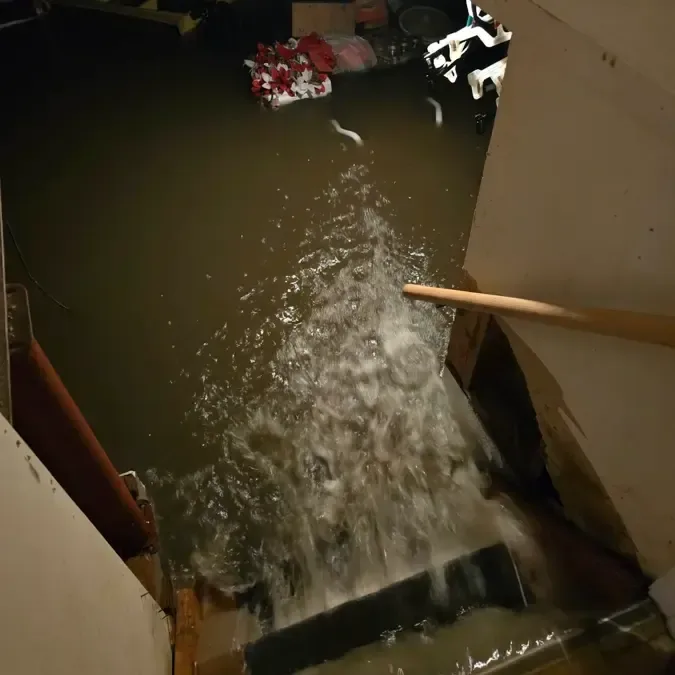
Dallas, Georgia is the Paulding County seat, and no major river runs through town. Heavy rain can still push runoff into low yards, crawl spaces and lower levels, and water that comes from outside carries contamination with it.
Key takeaways
- Pumpkinvine Creek is the largest creek in the Dallas area, and it drains toward the Etowah River.
- The Georgia Department of Natural Resources flood map viewer and the FEMA Flood Map Service Center let an owner look up flood risk by address.
- Water that enters from outside is treated as Category 3, so porous materials usually come out instead of drying in place.
- Switch off power and stay out of rooms with standing water until the circuits are safe.
- Document the loss with photos before moving anything, and check the policy for separate flood coverage.
Where water comes from around Dallas
Dallas sits in the Piedmont, at an elevation of about 1,043 feet. Waterways here belong to the Alabama-Coosa-Tallapoosa River Basin, and Pumpkinvine Creek is the largest creek in the area and a tributary of the Etowah River.
With no major river through town, water in Dallas homes more often arrives as storm runoff and small creek overflow than as river flooding.
The September 2009 floods show how large a regional rain event can get. The National Weather Service says an estimated 10 to 20 inches of rain fell in less than 24 hours at the height of that event, and Paulding County was among the Georgia counties named in the presidential disaster declaration.
Pavement, roofs and compacted lawns shed rain quickly, and that runoff has to go somewhere. Wherever a lot slopes, the low corner of a yard, a garage floor or a walkout level is where it ends up first.
Checking flood risk with state and FEMA maps
Owners do not have to guess whether a lot sits in a mapped flood zone. Two public tools give the answer, and both are quick to use after a storm or before a purchase.
A map shows risk, not the result of every storm. A house outside a mapped zone can still take on water from a clogged drain or a heavy downpour, and the reverse is also true.
- Look up the address in both tools and save a copy of what each one shows.
- Ask the insurer whether the property sits in a mapped zone and what that means for coverage.
- Check again after any new construction or drainage change nearby.
The Georgia flood map viewer
The Georgia Department of Natural Resources runs a flood map viewer that shows effective flood zones for the whole state. Type in a location and the zones appear on the map.
The FEMA Flood Map Service Center
The FEMA Flood Map Service Center looks up flood maps by address. It is the usual place a lender or insurer checks.
A standard homeowners policy often leaves out flood, and the National Flood Insurance Program is one source of separate coverage. Ask the insurer what applies before a storm, not after.
Why floodwater is Category 3
Restoration crews sort water by how clean it is, using the IICRC S500 standard. Category 1 starts clean, Category 2 carries some contamination and Category 3 is grossly contaminated.
Water that has crossed yards, driveways and ditches collects soil, fuel, fertilizer and sewage from overflowing drains. That puts creek and runoff water in Category 3, even if it looks clear.
Time matters here. Water that starts as Category 1 or 2 can move up a category if it sits warm for a day or two, which is why crews do not wait for the weather to clear before starting extraction.
- Porous materials that touched the water, like carpet, pad and insulation, are removed.
- Drywall that wicked water upward is cut out above the water mark.
- Hard surfaces are cleaned and treated before drying starts.
- Crew members wear protective gear, and the household stays out of the affected rooms.
The first steps after water enters the home
The first hours are about safety and records. Rushing back into a wet house can cause more harm than the flood did.
Local crews handle storm and flood cleanup for contaminated water, and the early steps that owners can take help the work go faster.
Stay away from tempting shortcuts. Running a household wet vacuum on sewage tainted water spreads contamination through the machine and the air, and fans pointed at wet carpet push it around the room.
- Switch off power at the panel if it is dry and safe to reach, and stay out of standing water that touches outlets.
- Do not use household vacuums or run the HVAC fan while floodwater is in the house.
- Photograph the high water mark, the damage and the contents before moving them.
- Lift small valuables and papers onto high shelves.
- Keep children and pets out of the wet rooms.
What the cleanup removes and what can be saved
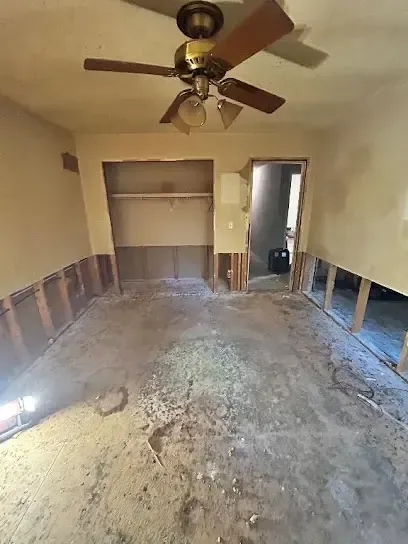
The extraction crew pumps out standing water first, since every hour of wetness adds to the damage. Water extraction is followed by a walk through each room to decide what stays.
Hard contents like glass and many plastics can be washed and treated. Soft items soaked by Category 3 water are usually discarded, and the crew photographs them for the insurance file.
Items that cannot be washed, like mattresses, upholstered furniture and stuffed toys, are typically discarded after Category 3 contact. The crew lists them for the insurance file before they leave the house.
- Carpet, pad and wet insulation are removed.
- Baseboards come off so walls can dry and be treated.
- Floors and framing are cleaned with disinfectants made for the job.
- Contents are sorted into wash, restore and discard groups.
Low spots, crawl spaces and lower levels
Water settles in the lowest part of a property. For many homes that is a crawl space or a walkout level, and standing water there can soak insulation and wood for days without being noticed.
If water has been under a house, treat it as contaminated, keep the power off and have a crew look at the framing. The storm and flood cleanup team can decide how much needs to come out and how much can be cleaned and dried.
- Look at crawl space vents and access doors after every heavy rain.
- Move stored boxes off basement and garage floors onto shelves.
- Keep gutters and downspouts clear and pointed away from the foundation.
Drying the house and watching the readings
After cleaning, structural drying takes over. Dehumidifiers and air movers pull moisture out of studs, subfloor and concrete, and the crew logs readings until they match a dry reference.
Mold can begin on damp materials in 24 to 48 hours, so drying should start as soon as the cleaning is done. Rebuilding waits for the readings, not the calendar.
- Dehumidifiers and air movers run in each affected room.
- Readings are logged at each visit and compared with a dry reference.
- Air scrubbers can help in rooms where dust or cleaning chemicals are present.
- Rebuilding starts only after framing, subfloor and concrete read dry.
Questions
Where can I look up flood zones for a Dallas address?
The Georgia Department of Natural Resources flood map viewer shows effective flood zones across the state, and the FEMA Flood Map Service Center looks up flood maps by address.
Does homeowners insurance cover flood damage?
A standard homeowners policy often excludes flood. Separate flood coverage exists, so read the policy or ask the insurer which water sources are covered.
Is it safe to clean up floodwater myself?
Small areas of clean rainwater may be manageable, but water that came from outside is Category 3 and can carry bacteria. Protective gear and the right disinfectants matter.
Can wet drywall be saved after a flood?
Drywall that touched Category 3 water is normally cut out above the water mark because it wicks water upward and holds contamination.
How long will the house take to dry?
It depends on how long the water sat and what the materials are. Crews check readings each visit and stop only when the framing and floors match a dry reference.