Water Damage Restoration Carrollton, GA
Burst pipes, storm water, failed water heaters and sewage backups all leave a Carrollton home with wet materials that need to come out and dry before the damage spreads into walls and framing.
(888) 532-4616Call about water in your home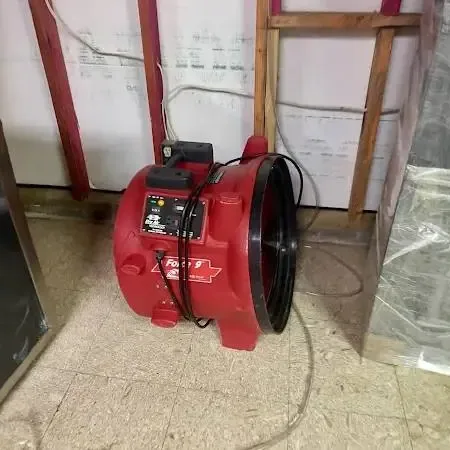
The response team records wet areas with photos and moisture notes as it works, which helps when an insurance claim follows.
(888) 532-4616Where most local water damage starts
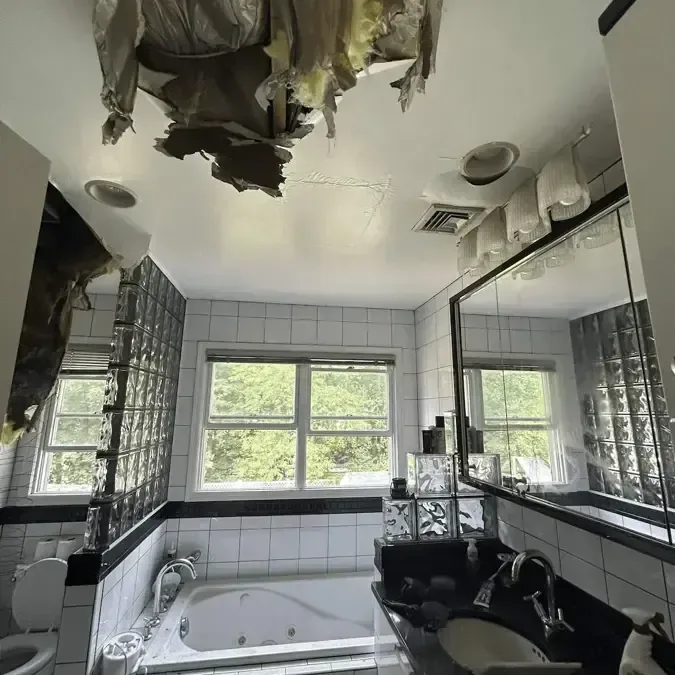
Pipes and plumbing failures
A split pipe, loose hose or leaking tank can soak a ceiling, a wall cavity and the floor below, and the water often travels out of sight.
Burst pipe cleanup details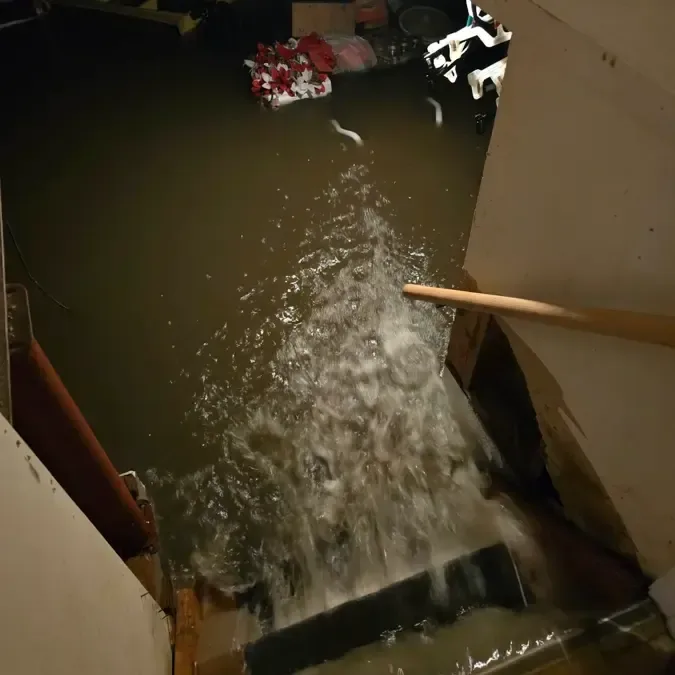
Storms and flooding
Spring and summer thunderstorms and tropical storm remnants can push runoff and roof water into crawl spaces, basements and lower floors.
Storm flood cleanup details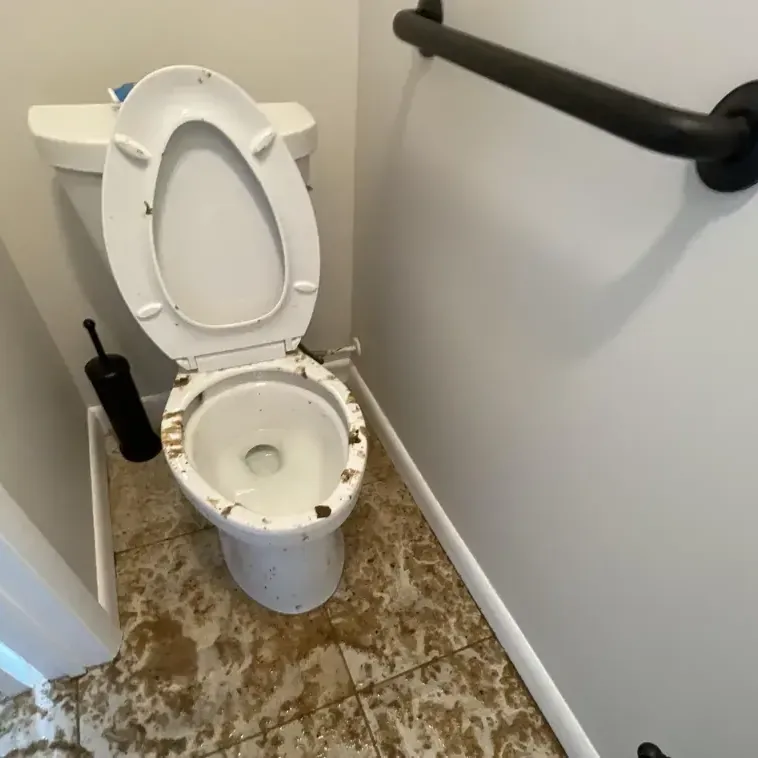
Sewage backups
A blocked drain can send contaminated water across a bathroom or lower level, which calls for protective gear, removal of porous materials and disinfecting.
Read about sewage cleanupWater problems the response team handles
Each service starts the same way, with the source stopped, standing water pulled out and wet materials dried, then branches by what the water came from.
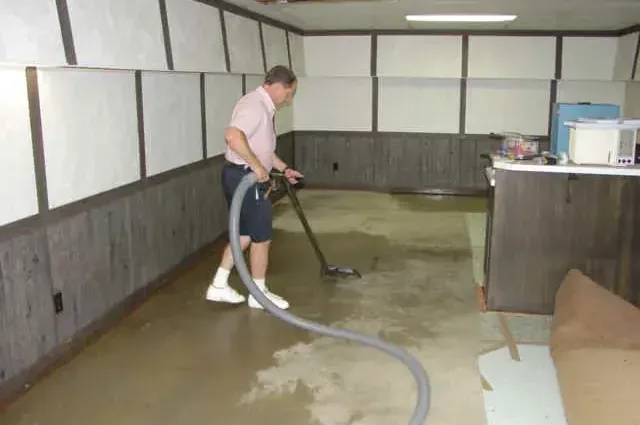 Water Extraction and RemovalPumps and wand tools pull standing water out of carpet, tile and subfloors in houses and rental apartments alike.See the full scope
Burst Pipe Water DamageA split supply pipe wets walls, ceilings and floors at once, so drying follows the whole wet path.See the full scope
Water Extraction and RemovalPumps and wand tools pull standing water out of carpet, tile and subfloors in houses and rental apartments alike.See the full scope
Burst Pipe Water DamageA split supply pipe wets walls, ceilings and floors at once, so drying follows the whole wet path.See the full scope
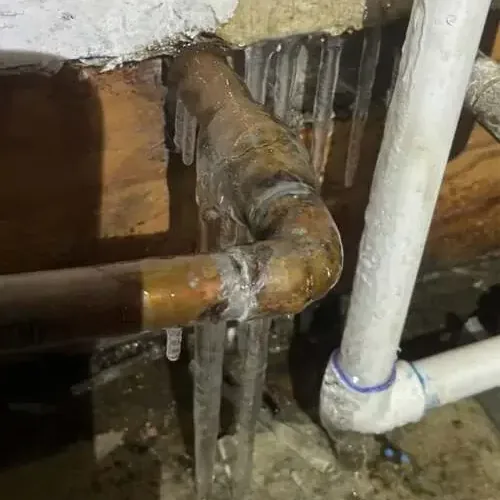 Frozen Pipe Burst CleanupPipes that ice up and split often run only after the thaw, soaking attics, crawl spaces and walls.See the full scope
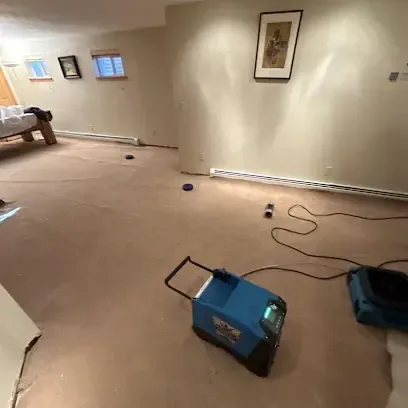 Basement Flooding CleanupHeavy rain and drain backups push water into lower levels, where wet carpet comes up and equipment dries the floor.See the full scope
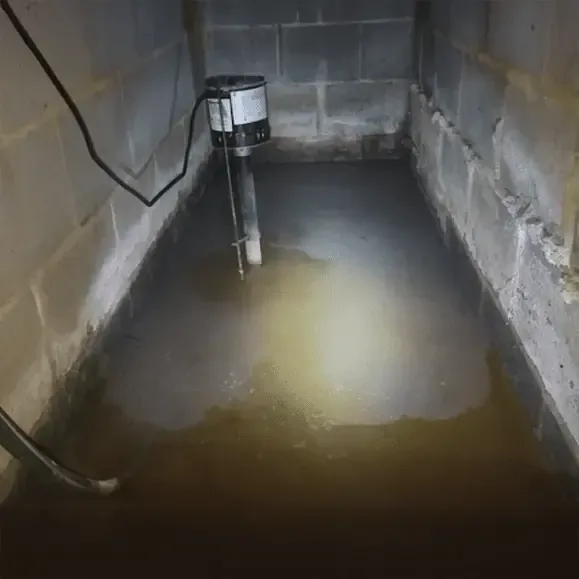 Crawl Space Water RemovalWater under a house from leaks or runoff gets pumped out, and the joists and insulation above get dried.See the full scope
Storm and Flash Flood CleanupAfter heavy rain, runoff and floodwater are extracted and the affected floors and walls are dried.See the full scope
Crawl Space Water RemovalWater under a house from leaks or runoff gets pumped out, and the joists and insulation above get dried.See the full scope
Storm and Flash Flood CleanupAfter heavy rain, runoff and floodwater are extracted and the affected floors and walls are dried.See the full scope
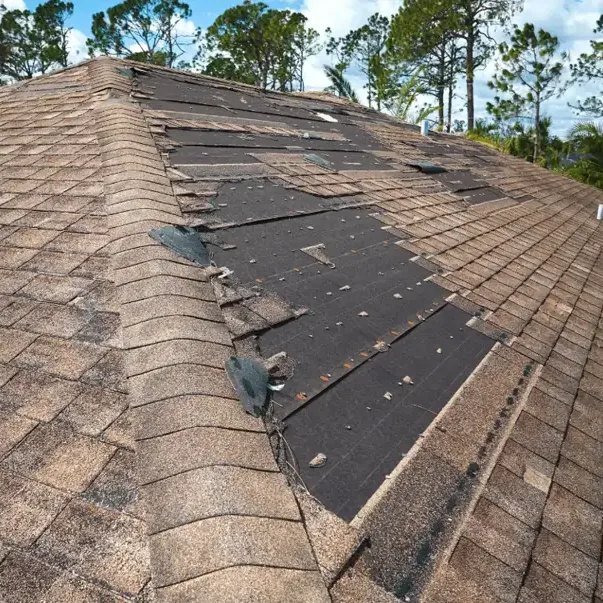 Roof Leak Water DamageWind and storm damage let rain through the roof, wetting insulation, ceilings and the rooms below.See the full scope
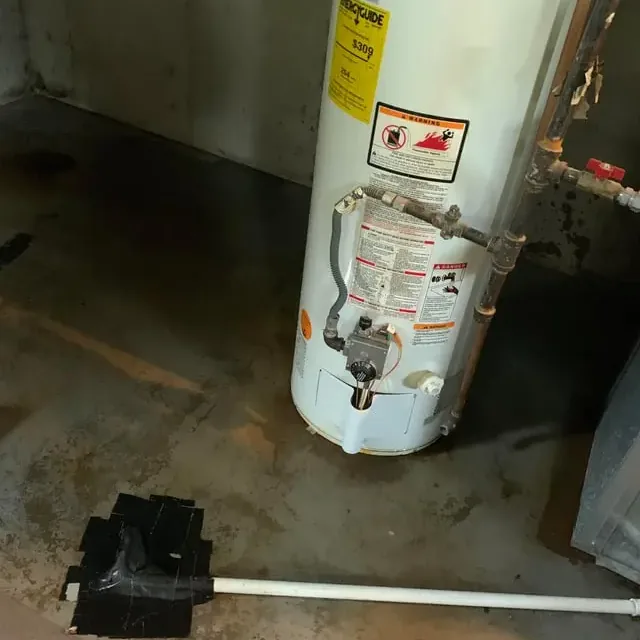 Water Heater Leak CleanupA failed tank floods a garage, closet or basement, and the crew dries the area around it.See the full scope
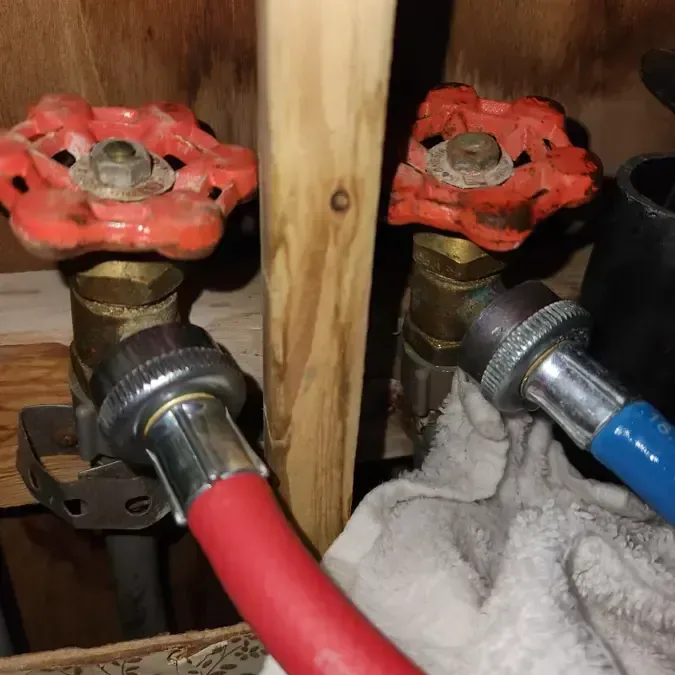 Appliance and Supply Hose LeaksWasher, dishwasher and ice maker hose failures spread water under flooring and into nearby rooms.See the full scope
Sewage Backup CleanupBacked up drains send contaminated water across floors, so porous materials go and surfaces are disinfected.See the full scope
Appliance and Supply Hose LeaksWasher, dishwasher and ice maker hose failures spread water under flooring and into nearby rooms.See the full scope
Sewage Backup CleanupBacked up drains send contaminated water across floors, so porous materials go and surfaces are disinfected.See the full scope
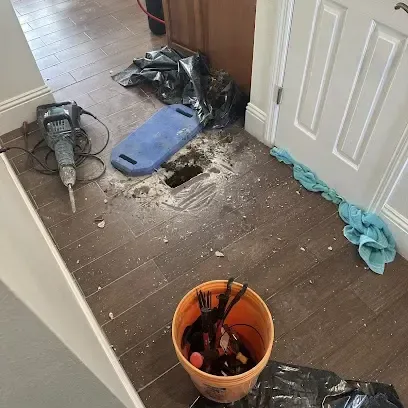 Slab Leak Water DamageA pipe leaking under the floor slab pushes water into flooring and walls and needs a plumber to locate it.See the full scope
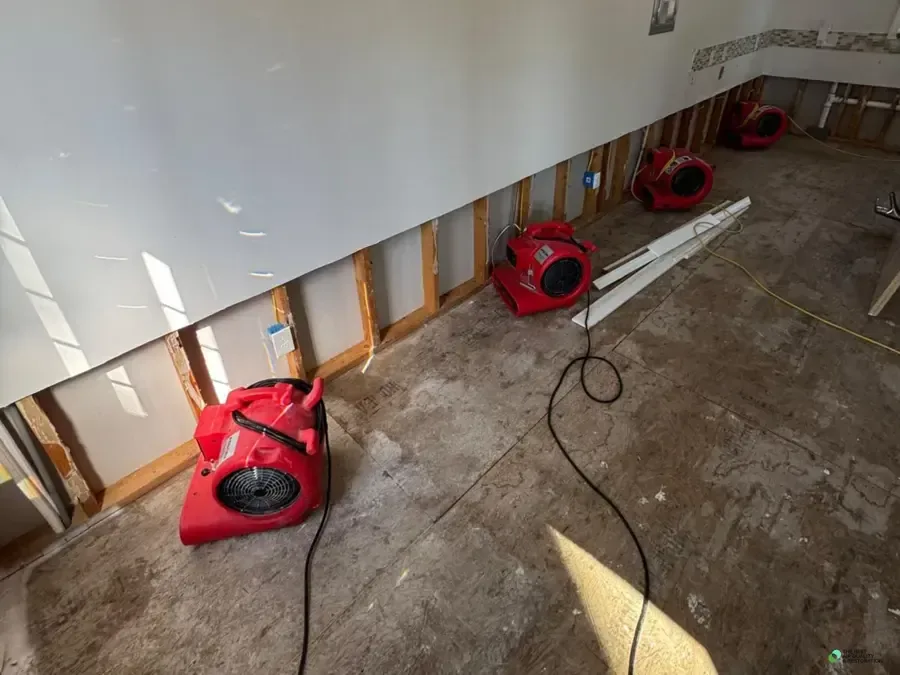 Structural Drying and DehumidificationAir movers and dehumidifiers run on meter readings until framing, subfloor and drywall return to normal.See the full scope
How the work is carried out
Every job follows the same order of work, from stopping the source to confirming dry readings, so nothing gets closed up while moisture remains in the framing.
Assess the water
The team identifies the water category, maps the wet area and checks hidden pockets with moisture meters and a thermal camera.
Remove and extract
Standing water comes out first, then soaked padding, drywall and insulation that cannot be saved are cut and bagged.
Dry on a plan
Air movers and dehumidifiers run until readings in the framing and subfloor return to normal for each material.
Confirm and document
Final readings, photos and the drying log are handed over so repairs and the insurance file rest on proof.
What to do while the water is still spreading
Stop the source
Shut the main valve or the appliance valve if it is safe to reach. Water that keeps arriving cancels out any cleanup.
Keep power away from water
Stay out of rooms where outlets or cords sit in water until the power to that area is switched off.
Photograph the damage
Take wide and close photos of wet walls, floors and belongings before anything moves. They support the claim later.
Lift what you can
Move small furniture, rugs and boxes to dry ground. Leave heavy pieces and soaked drywall for the crew.
Call the drying team
Describe where the water came from and how far it spread. That decides the extraction method and how much drying equipment goes in.
Water damage work built around readings, not guesses
Source first
The crew confirms the cause is stopped before drying starts, because drying around a leak that is still running only repeats the damage.
Readings, then equipment
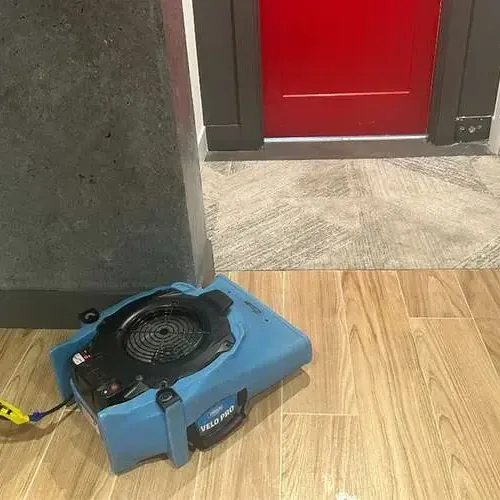
Moisture meters in drywall, framing and subfloor set how many air movers and dehumidifiers go in, and when they come out.
Water and sewage only
The work covers clean water, gray water and sewage, so the equipment and the process stay focused on wet materials.
Claim friendly records
Photos, readings and a drying log are kept for the adjuster, so the paperwork matches what was actually done.
What every dry-out is held to
Water behaves the same in every house, but the materials it soaks differ, so the drying plan is set by moisture readings in each room instead of by the clock.
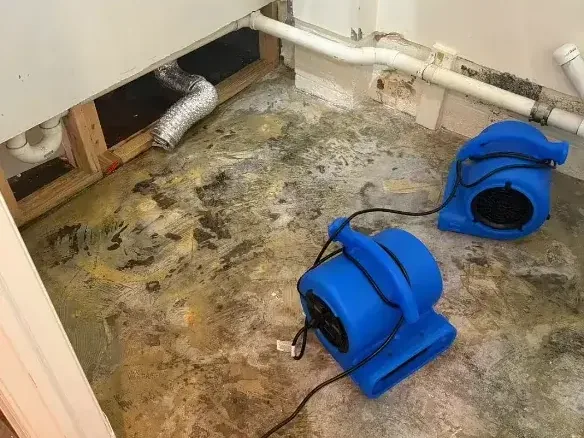
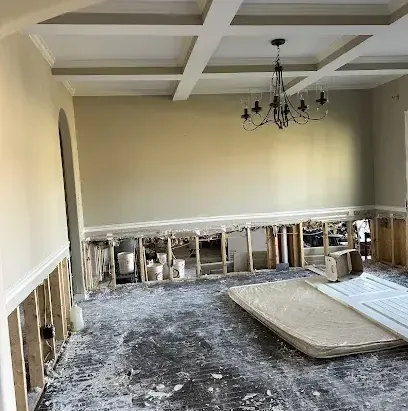
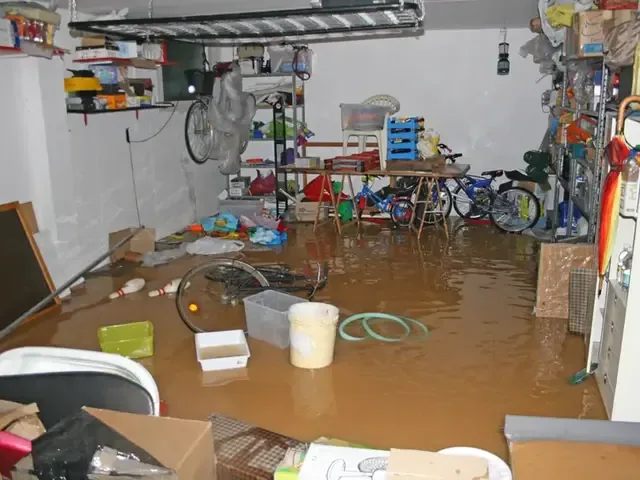
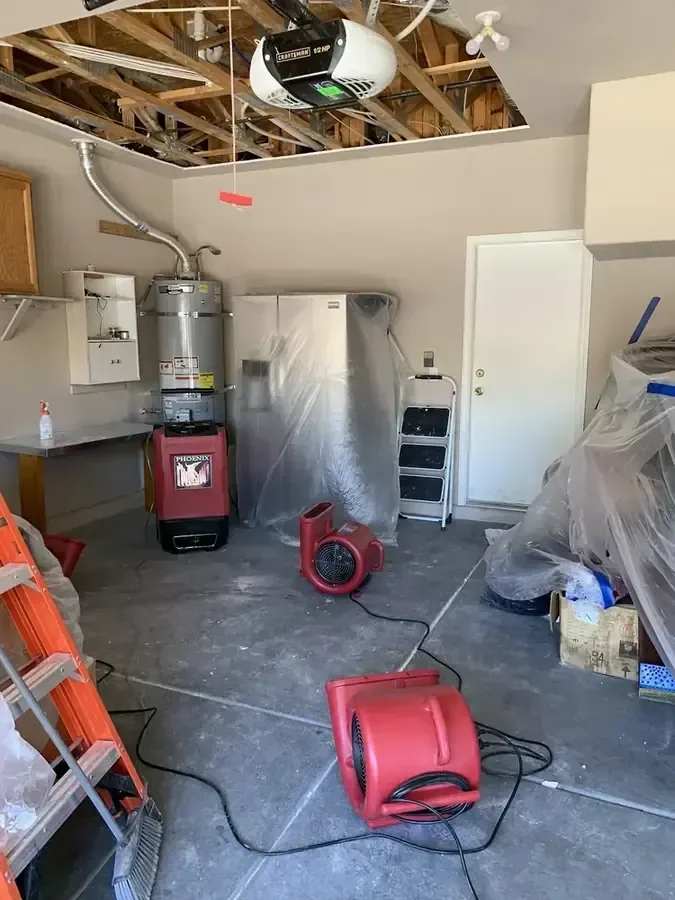
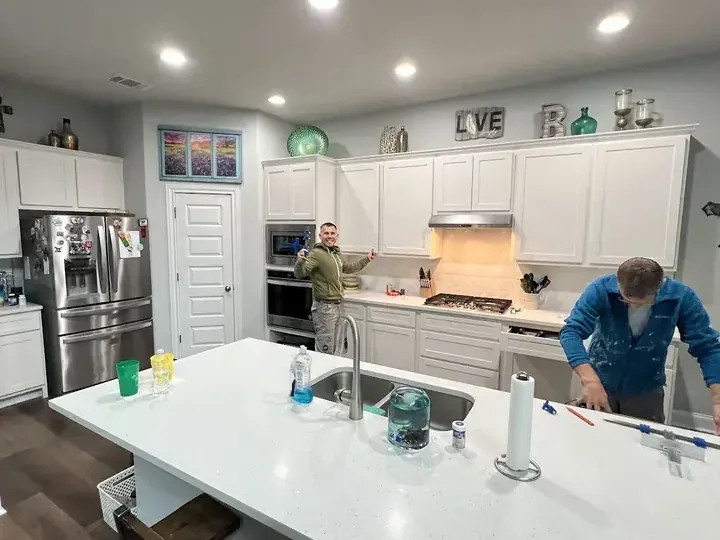
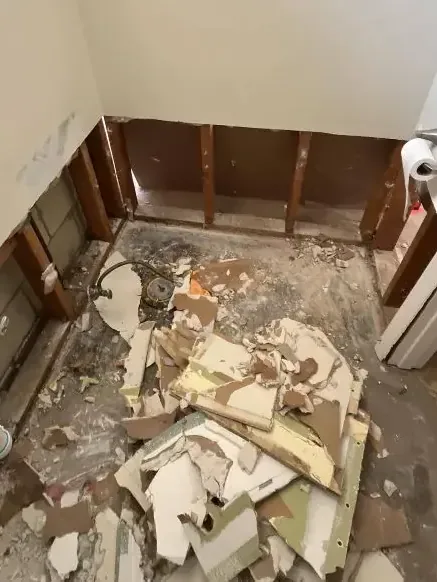
What a water damage dry out looks like inside a home
What water damage cleanup usually costs
Most jobs land between $1,200 and $9,500 or more, depending on how much water, how many rooms and which materials are wet. Gray water and sewage cost more than clean water because more removal and protection is needed.
One room, clean water source
- Standing water pulled out
- Fans and a dehumidifier
- Baseboards checked for damp
Several rooms or a ceiling
- Wall and ceiling sections opened
- Wet insulation and padding removed
- Several days of steady drying
Two floors or contaminated water
- Extended drying schedule
- Protective containment barriers
- Detailed moisture records
Working with an insurance claim
Many water damage jobs begin with a claim, and the drying records matter as much as the cleanup, since an adjuster looks for proof of the cause and the scope.
- Wide and close photos of each wet room before cleanup
- The date, time and suspected cause of the loss
- Moisture readings and the daily drying log
- Receipts for plumber and emergency repair work
- The adjuster name and claim number in one place
Skipping the claim
Small leaks from an appliance or a supply hose are sometimes cheaper to handle directly than to claim, especially when the deductible is close to the repair cost.
A written scope of work with the readings and photos makes it easier to weigh the deductible before deciding either way.
Final prices depend on an on site inspection, the water category and the materials involved, and an insurance adjuster may set what a policy pays.
Where the crew works around Carrollton
ZIP codes served
Who to call when water starts spreading
Most calls come from homeowners, landlords and property managers, and the same extraction and drying steps apply in a house, a townhome or an apartment unit.
Photos of the wet area sent after the call help the team plan equipment before anyone is on site.
Carrollton, GA · [email protected]
(888) 532-4616Call for water damage helpStreets and corridors
Nearby towns
What puts Carrollton homes at risk of water damage
Carrollton sits in west Georgia near the Alabama border, where thunderstorms, tropical storm remnants and the occasional hard cold snap all bring water into homes across the city.
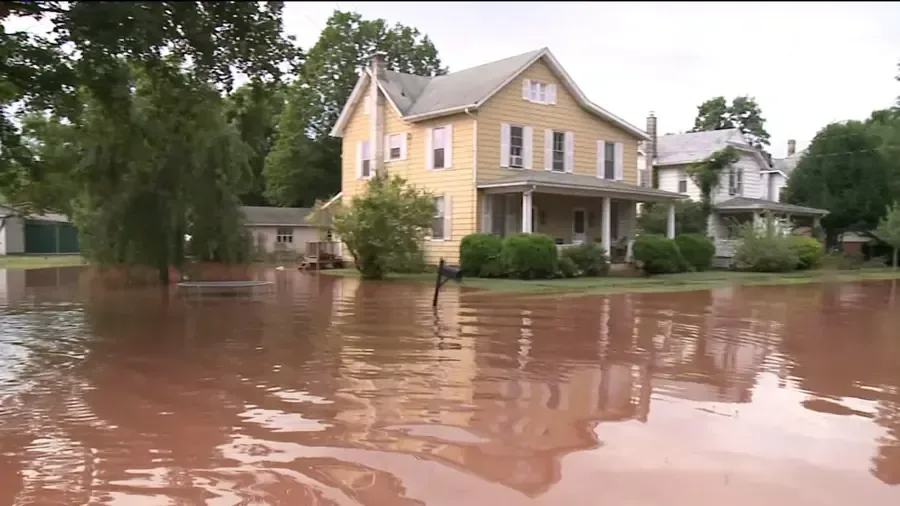
September 2009
Parts of north Carroll County got an estimated 8 to 10 inches of rain in 24 hours, and Carrollton measured 6 inches over 5 hours.
River and small stream flooding
The Little Tallapoosa River flows through the northwestern part of the city, and the University of West Georgia warns that its campus and the area around it can see urban and small stream flooding.
Thunderstorms and tornadoes
Spring and summer storms bring lightning and heavy rain, and the April 2017 tornado damaged numerous homes and vehicles, including on the University of West Georgia campus.
Tropical storm remnants
Tropical storms and hurricane remnants track north through Alabama and have brought high winds, heavy rain and occasional tornadoes to the area, sending water through roofs and windows.
Winter cold snaps
Severe winter weather is infrequent, but 10 to 11 inches of snow fell on December 8 and 9, 2017, and the university advises covering pipes and letting outdoor faucets drip.
Rentals and shared walls
With 59.0% of occupied homes rented, a leak in one unit often reaches a neighbor, so reporting it to the landlord matters as much as the drying.
Water damage questions from local homeowners
Still have a question?
Describe the water problem on a call and the team can explain the next steps, which equipment is likely and what the claim paperwork will need.
(888) 532-4616 (888) 532-4616Call about your water problemHow long does it take to dry a house after water damage?
Drying usually runs several days, depending on the materials, how much water soaked in and the humidity. Dense materials such as hardwood and framing take longer than carpet. The team checks readings daily and stops the equipment only when the framing and subfloor read dry.
Is water damage in a rental unit handled differently?
The drying steps are the same, but the report should go to the landlord or property manager first. About 59.0% of occupied homes in Carrollton are rented, so the work often involves a leak that began in a neighboring unit above or beside.
Does homeowners insurance cover water damage?
Coverage depends on the policy and the cause. Sudden events such as a burst pipe or an appliance failure are often covered, while slow seepage and flood water from outside often are not. Reading the policy or asking the adjuster settles it.
Can wet carpet and drywall be saved?
Clean water caught early can leave carpet and drywall salvageable after extraction and drying. Gray water or sewage means porous materials are cut out and discarded. Padding is usually replaced either way.
What should be done first when a pipe bursts?
Shut off the main valve, switch off power to wet areas if it is safe, and call a plumber and the restoration team. Photos taken before cleanup help the claim.
Does heavy rain cause flooding in Carrollton?
During the Great Flood of September 2009 the city measured 6 inches of rain over 5 hours. NOAA notes for the Little Tallapoosa River gauge on U.S. Route 27 describe flood water 3 feet deep over the road at major flood stage. Any water that enters a home needs extraction, as described under storm and flash flood cleanup.
How can pipes be protected in a hard cold snap?
The University of West Georgia advises covering pipes and letting outdoor faucets drip slowly. Pipes in garages, attics and crawl spaces are the first to ice up and split, as covered under frozen pipe burst cleanup.
What does a sewage backup cleanup involve?
Contaminated water is extracted, porous materials such as carpet and drywall are removed, and hard surfaces are cleaned and disinfected. The area is kept sealed from the rest of the home while a plumber fixes the drain problem. Details are under sewage backup cleanup.
Do all water damage jobs need dehumidifiers?
Almost every job does, since extraction removes liquid water but leaves moisture in the air and in the materials. Dehumidifiers pull that moisture out while air movers push dry air across wet surfaces.
Who should be called first, a plumber or the restoration team?
When water is still running, a plumber comes first to stop it. The restoration team handles extraction and drying and can work around the repair.
Water damage keeps spreading, so the first call should not wait
The restoration team can talk through the situation, plan the equipment and begin protecting the home once the source is stopped.
(888) 532-4616Call now, any hour