Structural Drying and Dehumidification in Villa Rica, GA
Structural drying removes the water that soaked into framing, subfloor, drywall and concrete after the visible water is gone. The drying team sets LGR dehumidifiers and air movers by the class of loss and logs readings until materials reach dry.
(888) 532-4616Have the framing dried and documented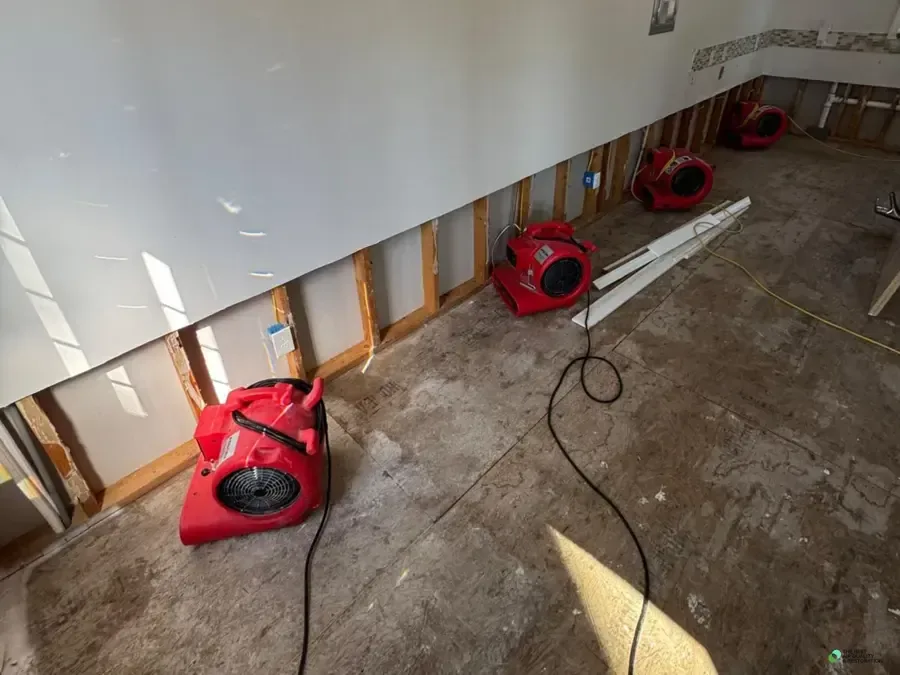
Why structural drying and dehumidification needs a measured dry-out
Dispatch at any hour
The response team dispatches 24/7, and active water is treated as urgent on weekends and holidays too.
Dried to IICRC S500
Air movers and LGR dehumidifiers are sized to the class of loss, and readings decide when equipment leaves.
Claim-ready records
Moisture maps, daily psychrometric logs and timestamped photos are taken before any demolition.
Water and sewage only
Extraction, structural drying and Category 3 cleanup are the whole job, from the first call to the last reading.
First steps for structural drying and dehumidification while help is on the way
A few safe moves for the household before the crew arrives.
- 1
Keep the windows closed. Humid air slows the drying.
- 2
Leave the equipment running. Turning it off adds days.
- 3
Keep interior doors as set. Airflow is planned room by room.
- 4
Note any new wet spots. Tell the drying team at the next check.
What does structural drying and dehumidification cost in Villa Rica, GA?
Structural drying typically runs $1,000 to $6,500, depending on the class of loss, how many rooms and levels are wet, the materials involved and how fast drying started.
Class 1 or 2, one area
- Air movers
- LGR dehumidifier
- Daily readings
Class 3, several rooms
- Cavity drying
- Multiple dehumidifiers
- Psychrometric logs
Class 4, dense materials
- Desiccant drying
- Hardwood or slab focus
- Extended drying
Ranges are typical, not a quote: the water category, square footage, material class and how fast drying started move the number most. Run the water damage cost calculator for a closer range; the claim file carries the moisture map and photos either way.
How structural drying and dehumidification is handled, step by step
Map moisture
Readings set the plan.
Size equipment
By class of loss.
Log daily
Same spots, every day.
Verify dry
Match the dry reference.
Surfaces dry fast; structures do not. Framing, subfloor and the back of drywall can hold water for weeks after carpet feels dry, and that hidden water is what warps floors, rots sill plates and invites mold growth once 24 to 48 hours pass.
How the drying plan is set
The tech who does the walkthrough sets the class of loss, from Class 1 with little water absorbed to Class 4 with dense materials like hardwood and concrete. The class decides the equipment.
- Dehumidifier capacity matched to the room volume and class
- Air movers placed by the wet wall and floor area
- Desiccant units for hardwood, plaster and concrete
Humid west Georgia summers make dehumidification the main tool, since outside air brings more moisture in.
Measuring dry, not guessing
A dry reference is a reading from the same material in an unaffected part of the house. Wet materials are dried until they read within 2 to 4 points of it.
- Pin and pinless meter readings in fixed spots
- Temperature and humidity logged inside and outside the drying zone
- Thermal imaging to find pockets that are drying slowly
Equipment stays until the numbers say dry, which is what an adjuster looks for in the claim file.
Floors dry but the walls still damp? The drying team works 24/7.
(888) 532-4616Ask for moisture readings on the wallsWhen drying needs help from removal
Some materials dry faster opened than closed. Baseboards come off to vent wall cavities, and insulation that holds water comes out so framing can breathe.
- Flood cuts only where readings stay high
- Floating floors lifted to dry the subfloor
- Cabinet toe kicks opened for airflow
Water that has not been removed yet comes first; see water extraction for that step.
Check the numbers before the walkthrough
The water damage cost calculator and the drying time estimator give typical ranges for a local home. The walkthrough and moisture map set the real scope.
Structural drying and dehumidification across Villa Rica and nearby communities
Dispatch reaches every neighborhood listed here, day or night.
Coverage runs across ZIP 30180, from downtown and the historic district out to Fullerville, Mirror Lake, West Lakes and Fairfield Plantation, along Bankhead Highway, Dallas Highway and the I-20 corridor.
Nearby coverage reaches Dallas, Temple, Douglasville, Carrollton, Bremen, Hiram, Austell, South Fulton.
See every neighborhood and ZIP coveredRelated water damage services
Structural Drying and Dehumidification questions in Villa Rica, GA
Still dealing with it?
Floors dry but the walls still damp? The drying team works 24/7.
(888) 532-4616 (888) 532-4616Ask for moisture readings on the wallsWhat is structural drying?
Structural drying removes water from the building itself: framing, subfloor, drywall and concrete. It uses dehumidifiers and air movers sized to the class of loss, with daily readings.
How long does structural drying take?
A Class 1 or Class 2 loss usually dries in three to five days. Class 3 losses take longer, and Class 4 losses with hardwood or concrete can take a week or more.
Why can't the equipment come out when the floor feels dry?
Framing and the back of drywall hold water after surfaces feel dry. Equipment stays until readings match a dry reference in an unaffected room.
What does an LGR dehumidifier do?
A low-grain refrigerant dehumidifier pulls water from the air even when the air is already fairly dry, which keeps wet materials releasing moisture.
Why do the drying logs matter for insurance?
Daily psychrometric logs and moisture readings show the adjuster how wet the structure was and when it reached dry, which supports the claim file.
Still damp inside the walls? Get the structure dried.
Hidden water in framing and subfloor warps floors and loosens finishes. Measured drying gets it out.
(888) 532-4616Get dehumidifiers and readings in place