Structural Drying and Dehumidification in South Fulton, GA
Water that has soaked into framing, subfloor and drywall does not leave on its own. The drying team places air movers and dehumidifiers, logs meter readings and keeps the equipment running until the materials read dry.
(888) 532-4616Call about drying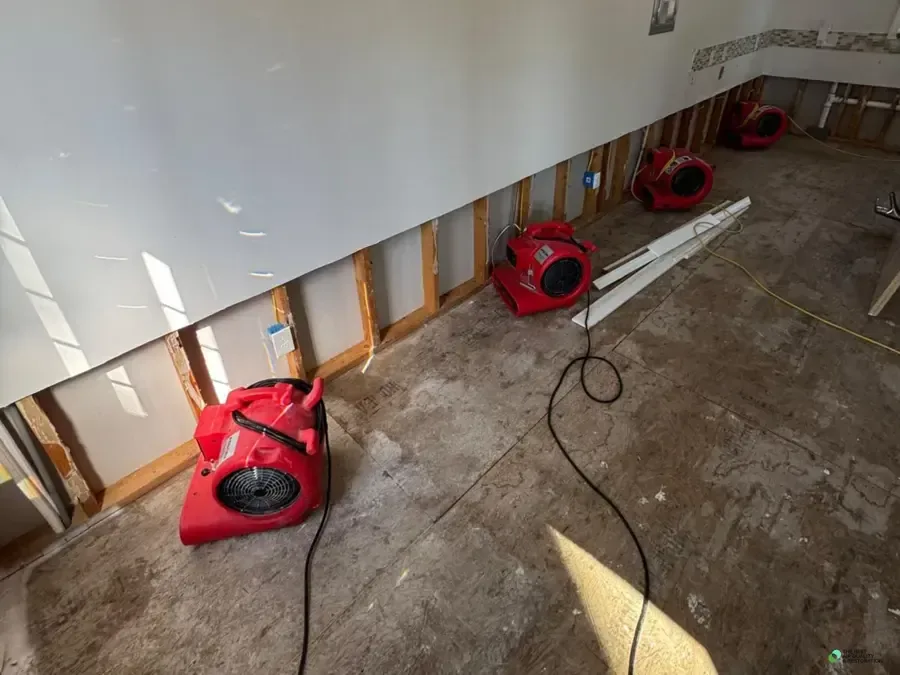
Why structural drying and dehumidification needs a measured dry-out
Dispatch at any hour
The response team dispatches 24/7, and active water is treated as urgent on weekends and holidays too.
Dried to IICRC S500
Air movers and LGR dehumidifiers are sized to the class of loss, and readings decide when equipment leaves.
Claim-ready records
Moisture maps, daily psychrometric logs and timestamped photos are taken before any demolition.
Water and sewage only
Extraction, structural drying and Category 3 cleanup are the whole job, from the first call to the last reading.
First steps for structural drying and dehumidification while help is on the way
A few safe moves for the household before the crew arrives.
- 1
Remove standing water. Drying works only after extraction is complete.
- 2
Keep doors and windows shut. Closed rooms let dehumidifiers pull moisture efficiently.
- 3
Leave the equipment running. Turning it off early leaves moisture in the framing.
- 4
Keep a log. Note the date, rooms and the readings from each visit.
What does structural drying and dehumidification cost in South Fulton, GA?
Structural drying usually costs about $1,000 to $2,500 for one area with light materials and up to $6,500 or more when dense materials such as hardwood need extended drying.
Class 1 or 2, one area
- Air movers placed
- Dehumidifier set up
- Daily moisture readings
Class 3, several rooms
- Equipment in each room
- Wall cavities opened
- Extended monitoring visits
Class 4, dense materials
- Specialty drying equipment
- Hardwood drying
- Readings logged
Ranges are typical, not a quote: the water category, square footage, material class and how fast drying started move the number most. Run the water damage cost calculator for a closer range; the claim file carries the moisture map and photos either way.
How structural drying and dehumidification is handled, step by step
Measure
Meters map wet materials
Set up
Air movers and dehumidifiers placed
Monitor
Readings logged each visit
Finish
Equipment removed once dry
Census QuickFacts lists the median value of an owner-occupied home in South Fulton at $309,800, which makes it worth drying wet framing and subfloor properly instead of covering them up. Surface dryness fools the eye, because lumber and concrete hold moisture long after a floor feels dry.
Why drying takes more than a fan
Different materials give up water at different speeds, so one fan in the corner never finishes the job.
- Wet drywall and insulation hold water and dry slowly
- Hardwood, subfloor and framing absorb water deep inside
- Closed rooms need dehumidifiers because fans only move humid air
Mold can begin to grow after about 24 to 48 hours of dampness, which is why drying starts as soon as the water is out.
How the equipment is set up
The drying team sizes the setup to the volume of the room and the materials that got wet.
- Air movers are aimed along wet walls and floors
- Dehumidifiers lower humidity in a sealed room
- Small openings give air access behind walls
The setup changes between visits as some areas dry faster than others.
Wet walls or floors? Call before the moisture settles into the framing.
(888) 532-4616Describe the wet areas by phoneHow the finish is decided
Meters, not a calendar, decide when the equipment leaves.
- Drywall, wood and concrete are read each day
- Readings are compared with dry reference materials
- Equipment comes out only when the numbers level off
Standing water has to be removed first, which the water extraction service covers, and the main structural drying page lists the full process.
Check the numbers before the walkthrough
The water damage cost calculator and the drying time estimator give typical ranges for a local home. The walkthrough and moisture map set the real scope.
Structural drying and dehumidification across South Fulton and nearby communities
Dispatch reaches every neighborhood listed here, day or night.
Structural drying covers South Fulton from Fulton Industrial Boulevard to Old National Highway and neighborhoods such as Campbellton, Oakhurst Glen and Welcome All, indoors wherever water soaked in.
The same service nearby: structural drying and dehumidification in Villa Rica, Austell, Dallas.
See every service for this townRelated water damage services in South Fulton
Structural Drying and Dehumidification questions in South Fulton, GA
Still dealing with it?
Wet walls or floors? Call before the moisture settles into the framing.
(888) 532-4616 (888) 532-4616Describe the wet areas by phoneHow long does structural drying take?
It runs until meters show drywall, subfloor and framing at dry values. Dense materials such as hardwood take longer than drywall, and the equipment stays until readings level off.
Why are dehumidifiers needed as well as fans?
Fans move air but do not remove moisture from it. Dehumidifiers pull water out of the air so wet materials keep releasing moisture instead of the room just getting more humid.
Can a house be dried without opening walls?
Sometimes. Small holes or removed baseboards give air access to cavities, but saturated drywall and insulation are usually cut out so framing can dry properly.
What do the meter readings show?
Readings compare each material with a dry reference, so the drying team can see whether moisture is falling and when the structure is actually ready.
Is it normal for the equipment to run for days?
Yes. Drying is gradual, and stopping early leaves moisture in framing and subfloor, which can lead to mold and damaged finishes.
Water soaked into the structure?
Moisture left behind in framing and subfloor causes trouble months later. The drying team sets equipment, logs readings and keeps drying until the numbers agree.
(888) 532-4616Call about drying