The City of South Fulton's news page has carried a boil water advisory, a notice lifting it and a notice about a water main break in the Stonewall Tell Road area. The break itself is a public problem in the street, but what happens inside a house when pressure drops and returns is a private one.
Key takeaways
- A main break outside can drop water pressure at the house, and open faucets and valves cause trouble when service comes back.
- Utilities and sanitation in South Fulton are managed by Fulton County or other providers, not by the city's own departments, so the notice itself shows who to ask.
- A boil water advisory is about drinking water. It does not change how a wet floor is extracted and dried.
- After pressure returns, check the water heater, washer, ice maker and toilets for leaks.
- Photograph the meter, the valves and any damage right away.
A break outside versus a leak inside
A water main break is a failure in the public pipe under the street, and it is fixed by the utility. A leak inside the house is the owner's problem, even if it started when the street pipe failed.
A WSB-TV report described a South Fulton water main break that turned a road into a sheet of ice and stranded drivers, which shows how visible the street side can be. The house side is quieter, and the damage can go unseen for hours.
Because utilities and sanitation are managed by Fulton County or other providers, not by the city's own departments, a notice from the provider is the best source for which areas are affected and when service returns.
What a pressure drop and return can do indoors
In March 2019, the Fulton County South Service Center on Stonewall Tell Road closed because it had no water pressure. A boil water advisory covered the building and the surrounding area while the City of Atlanta Department of Watershed Management worked to restore service.
A house can lose pressure the same way, and the return of pressure is when indoor leaks appear.
Some houses have a shutoff valve at the meter and another where the supply enters the building. Knowing both locations lets an owner stop the flow in seconds instead of searching during a leak.
None of this happens in every house, and many pass through an outage with no trouble. The risk is highest where something was left running or where an old fitting was already close to failing.
- Faucets left open during the outage start to run when service returns.
- A washing machine with its valves open can fill and overflow.
- Pressure surges can stress old hoses, fittings and the water heater connections.
- Air in the pipes can spit water from taps and shake loose a weak joint.
What to do when the water goes out
The best moment to prevent damage is while the water is still off. A few quick checks make the return of service much safer.
The water heater deserves special care. A tank that drains while the supply is off can leave the heating element exposed, and turning off power until service returns protects it.
- Close every faucet that was open, including the tub and outdoor spigots.
- Turn off the washing machine and dishwasher and close their valves.
- Switch off power to the water heater so the heating element does not run dry.
- Note which toilets, ice makers and humidifiers were running.
- Read the notice from the city or provider for details on the advisory.
What to check when service returns
Open one faucet at a time and let it run until the water clears. Then walk through the house and look at places where a surge may have found a weak spot.
A slow check is better than a fast one. Spend a few minutes at each spot before moving on, and look for dampness, drips and the smell of wet drywall.
- Under sinks, around the toilet supply and behind the washing machine.
- At the water heater connections and the relief valve.
- At the ice maker and refrigerator water supply.
- The water meter, with every fixture off, to see whether it keeps moving.
If water gets into the house
Even a small leak can be hard to find, and the cleanup depends on knowing where the water has gone.
Extraction first
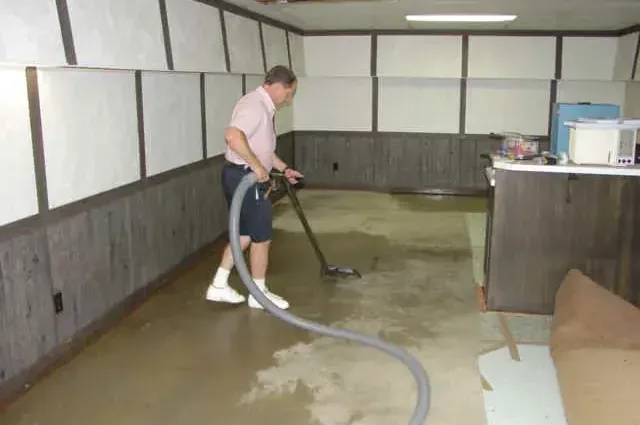
A local crew starts with water extraction, pulling standing water from floors and carpet. Clean supply water is Category 1 at first, and the goal is to remove it before it ages.
If the water has soaked into carpet or pad, those come out quickly, since pad holds water against the subfloor.
Finding the source
When the water came from a split pipe or a failed fitting, the crew traces the wet area with moisture meters and a thermal camera. The burst pipe water damage work includes opening walls where the readings show water.
Drying the wet area
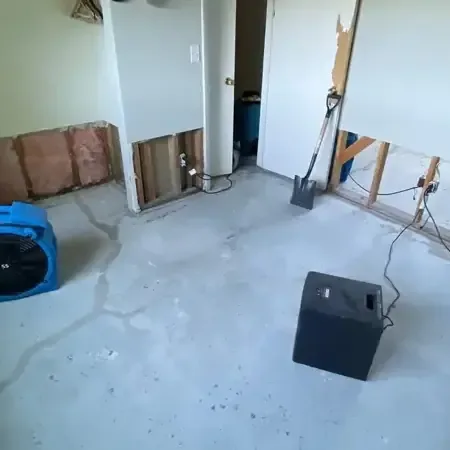
After the water is out, the crew opens the affected area if readings call for it and sets dehumidifiers and air movers. Wet carpet pad is removed, and baseboards come off so the wall bottoms can dry.
Records for the insurer and the provider
Good records speed up everything that comes after. A few photos and notes taken right away are worth more than a long description weeks later.
- Photograph the meter, the valves and the affected rooms.
- Write down when the outage began and when service returned.
- Save the notice from the city or the provider.
- Keep receipts for any plumber, drying or cleanup work.
Drying and boil water advisories
A boil water advisory means drinking water should be boiled before use. It has nothing to do with whether a floor, a wall or a cabinet is dry.
Structural drying uses dehumidifiers and air movers, and the crew checks readings on each visit. Drying is finished when framing and subfloor match a dry reference, not when the surface looks dry.
The South Fulton water damage team can also help with the other causes of indoor water, from appliances to storm runoff.
- Do not use tap water for drinking until the advisory is lifted.
- Keep records of the dates on any notice from the city or the provider.
- Share photos and readings with the insurer if damage occurs.
Rebuilding after the drying
Once readings show the structure is dry, repairs can begin. The City of South Fulton Permitting Division issues building permits for all new construction, remodel and up-fit work, and repairs, so larger rebuilds are worth checking with the city first.
A plumber who replaces damaged pipe or fixtures can tell the owner what the work involves. Good timing keeps the walls open until the drying is done and the repair is ready to start.
- Wait for dry readings before closing walls.
- Ask about permits before starting larger repairs.
- Keep the drying log with the repair records.
Questions
Who fixes a water main break in South Fulton?
Utilities and sanitation in the city are managed by Fulton County or other providers, not by the city's own departments. The notice about the break is the best source of who is responsible.
Why do leaks show up after the water comes back?
Pressure returns suddenly, and anything left open or weak can fail. Faucets, valves and hoses are checked first.
Does a boil water advisory change how a wet floor is dried?
No. The advisory concerns drinking water. Drying follows moisture readings in the structure.
Does homeowners insurance cover damage from a main break?
Coverage depends on where the water came from and the policy. Damage from a failed pipe inside the house is treated differently from a public break outside, so ask the insurer.
How long until the house is dry?
That depends on what got wet and how much. Crews log readings on each visit and stop when the materials match a dry reference.