On Friday, September 11, 2026, the National Weather Service in Peachtree City issued a flash flood warning for Haralson County and nearby counties, and Bremen was named among the places expected to see flash flooding. A warning does not mean a house flooded, but it shows how quickly water can find a basement or a low level.
Key takeaways
- The September 11, 2026 warning listed small creeks and streams, streets, underpasses and poor drainage or low-lying areas among the flash flooding impacts.
- By 4:23 PM that day radar showed 2 to 3 inches of rain already fallen and 1 to 2 more possible.
- Water enters a lower level through floor drains, window wells, wall cracks and doors, often at several points at once.
- Water that comes in from outside is treated as Category 3, so wet carpet, pad and low drywall come out while hard surfaces are cleaned and dried.
- Signing up for the city alert service and weather warnings buys time to lift belongings before the water rises.
What the flash flood warning said
The warning ran until 10:30 PM that Friday. At 4:23 PM, radar showed thunderstorms with 2 to 3 inches of rain already on the ground and 1 to 2 more inches possible.
The National Weather Service named the kinds of places most likely to flood, and the list reads like a map of where water gathers around a house.
Warnings like this one are written for a whole area, not for one street. Whether a particular basement takes on water depends on its slope, its drains and the ground around it.
- Small creeks and streams.
- Urban areas, highways and streets.
- Underpasses.
- Poor drainage areas and low-lying areas.
How runoff finds a basement or low level
Bremen sits at an elevation of about 1,394 feet, in the hilly upper Piedmont. Rain on hilly ground runs downhill fast, and creeks such as Baxter Creek, which the Georgia Environmental Protection Division monitors on Hoke Golden Road near town, carry some of it away.
Ground that is already wet cannot soak up much more. After a couple of inches of rain, most of the next inch runs off instead of sinking in, and runoff is what reaches foundations.
What the creeks do not carry ends up at the lowest door, window well or drain on a property. Not every home here has a basement, but those with one or with a low walkout level are the ones most exposed.
Water usually comes in at more than one place, so checking only the obvious spot can miss the others.
If water is rising fast, or the smell suggests sewage, leave the lower level and wait outside until it is safe to go back.
- Floor drains that back up when the ground outside is saturated.
- Window wells that fill and spill over the sill.
- Cracks and joints where the floor meets the wall.
- Doors at the bottom of a sloped driveway or a walkout.
First steps when water is coming in
The goal is safety, then belongings, then records. Nothing in a basement is worth standing in water near an outlet.
A sump pump helps only while it has power and a clear discharge. A tripped breaker or a blocked outlet lets water collect quickly, and a battery backup is one way to keep a pump running through a storm outage.
- Turn off power to the lower level at the panel if the panel is dry and easy to reach.
- Do not wade into standing water that touches outlets, appliances or a furnace.
- Lift boxes, electronics and papers onto shelves, tables or pallets.
- Photograph the water level and the damage before moving things.
- Stay out of the room if the water is rising or smells like sewage.
Pumping out and cleaning a flooded lower level
A local water damage crew removes the standing water first, and on a deep flood it often does that in stages. Taking water out too fast can put pressure on walls when the ground outside is still saturated.
Water extraction is followed by a room by room decision about what comes out. Because the water came from outside, it counts as Category 3, and porous materials that soaked it up are removed.
The basement flooding cleanup work then moves to cleaning, with hard surfaces washed and treated before any drying equipment runs.
Not everything is lost. Concrete walls and floors, many plastic storage bins and solid wood furniture can be cleaned and kept, and the crew photographs anything discarded for the insurance file.
- Carpet and pad are removed and discarded.
- Wet drywall, baseboard and insulation are cut out above the water mark.
- Concrete, block and framing are cleaned and treated.
- Contents are sorted into wash, restore and discard groups.
Drying a basement in hot, wet weather
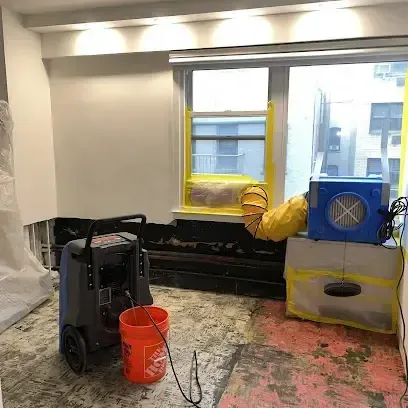
Bremen has a humid subtropical climate with hot, wet summers, and the air outside is rarely dry. That makes controlled drying important, because open windows bring in the same moisture the crew is trying to remove.
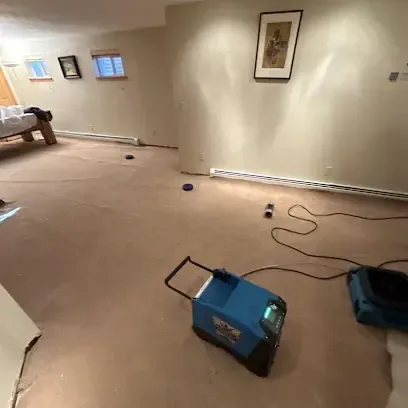
Dehumidifiers and air movers run with the house closed up. The crew logs moisture readings each visit and keeps the equipment going until the framing, slab and walls match a dry reference.
Mold can begin on wet materials in 24 to 48 hours, so a slow start costs more than a quick one. The storm and flood cleanup crew can explain how long a typical room needs, based on its readings.
Drying is measured, not guessed. A floor that feels dry to the hand can still hold moisture, which is why the crew checks concrete, framing and the bottom of drywall with meters before equipment is removed.
Getting ready before the next warning
The city offers a Bremen Alerts notification service, and the National Weather Service issues warnings for the area. The Carroll County Hazard Mitigation Plan appendix says flash floods can occur at any time of year in Georgia, but are most common in spring and summer.
A February 2025 flood warning for Haralson County and nearby counties came with emergency management reports of flash flooding on roads, so the pattern is not limited to one storm.
Preparation does not have to be elaborate. A few habits make the next warning easier to handle, and most take less than an afternoon.
- Sign up for the city alert service and keep weather alerts on during storms.
- Keep gutters, downspouts and window wells clear.
- Store valuables on shelves instead of the floor.
- Check the FEMA Flood Map Service Center for the property.
- Learn where the electrical panel and shutoffs are before a storm.
- For other water problems, the local water damage team covers pipes, appliances and roofs too.
Questions
What is the difference between a flood watch and a flood warning?
A watch means conditions could lead to flooding. A warning means flooding is happening or about to happen, and people in the area should move belongings and stay out of low spots.
Is basement floodwater Category 3?
Water that comes in from outside, over ground and through drains, is treated as Category 3 because it can carry bacteria and other contamination. Carpet, pad and low drywall that soaked it up are usually removed.
Should the water be pumped out right away?
Standing water should come out soon, but deep water is often removed in stages while the ground outside drains. A crew can judge the pace.
Does homeowners insurance cover basement flooding?
It depends on how the water got in. Runoff and rising water are often excluded from a standard policy, and a drain backup may need a separate add on, so read the wording or ask the insurer.
How long does a basement take to dry?
It depends on how long the water stayed and how much material soaked it up. The crew keeps equipment running until readings match a dry reference, which often takes several days.