Basement Flooding Cleanup in Bremen, GA
When heavy rain, seepage or a drain backup puts water in a lower level, as the September 11, 2026 flash flood warning for Bremen reminded homeowners, the crew pumps it out, removes wet finishes and dries what remains.
(888) 532-4616Call about a flooded basement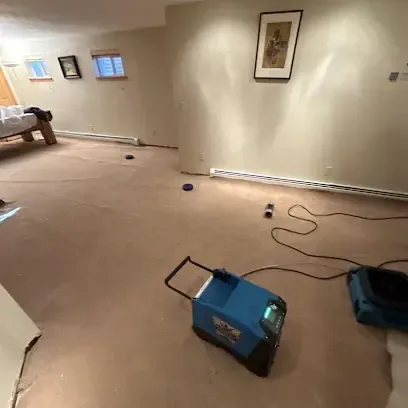
Why basement flooding cleanup needs a measured dry-out
Dispatch at any hour
The response team dispatches 24/7, and active water is treated as urgent on weekends and holidays too.
Dried to IICRC S500
Air movers and LGR dehumidifiers are sized to the class of loss, and readings decide when equipment leaves.
Claim-ready records
Moisture maps, daily psychrometric logs and timestamped photos are taken before any demolition.
Water and sewage only
Extraction, structural drying and Category 3 cleanup are the whole job, from the first call to the last reading.
First steps for basement flooding cleanup while help is on the way
A few safe moves for the household before the crew arrives.
- 1
Stay out until safe. Turn off basement power before anyone steps into standing water.
- 2
Pump the water. Submersible pumps drop the level in stages so walls are not stressed.
- 3
Remove wet finishes. Carpet, padding and soaked lower drywall are bagged and removed.
- 4
Dry and document. Dehumidifiers run while readings and photos build the claim file.
What does basement flooding cleanup cost in Bremen, GA?
An unfinished basement or one room usually costs $2,000 to $4,000, a finished basement with clean water runs $4,000 to $7,000, and drain backup or storm water can reach $10,000 or more.
Unfinished or one room
- Pump out and vacuum
- Wet material removal
- Dehumidified drying
Finished basement, clean water
- Flooring and drywall removal
- Longer drying cycle
- Daily readings
Drain backup or storm water
- Disinfection steps
- Protective containment
- Extended monitoring
Ranges are typical, not a quote: the water category, square footage, material class and how fast drying started move the number most. Run the water damage cost calculator for a closer range; the claim file carries the moisture map and photos either way.
How basement flooding cleanup is handled, step by step
Power off
Safety check before entry.
Pump down
Water drops in stages.
Strip and sort
Wet finishes come out.
Dry and verify
Readings confirm the slab.
Basements collect water because they sit below the surrounding ground. The National Weather Service listed poor drainage and low areas among the impacts of its September 11, 2026 flash flood warning, with 2 to 3 inches of rain already fallen by 4:23 PM.
How rain and seepage reach a basement
Water enters through window wells, floor cracks, the joint where the wall meets the slab and failed sump pumps, and it often rises faster than a homeowner can move belongings.
- Pressure outside the wall pushes water through cracks and joints
- Window wells overflow when rain outruns the drain
- Sump pumps stop when the power goes out or the pump fails
Hilly ground around Bremen sends runoff downhill toward low points, which is one reason a lower level can flood even when the upstairs stays dry.
What gets removed and what is dried
Floors and walls that touched flood water are sorted by how porous they are. Anything that stays wet for days becomes a mold risk, so decisions are made early.
- Carpet and padding are cut out and bagged
- Drywall is removed above the waterline when wicking has occurred
- Concrete and framing stay and are dried with dehumidifiers
Contaminated flood water is handled with gloves, boots and disinfection. Finished spaces get a written scope before demolition begins.
Water in the basement right now? Call now and the extraction crew explains what to unplug and what to leave alone.
(888) 532-4616Call about basement waterDrying the lower level
A basement is cool and damp by nature, so drying needs sealed doors, dehumidifiers sized to the space and daily readings. Ordinary fans alone seldom do the job.
- Air movers and dehumidifiers run together
- Readings are logged until walls and slab are dry
- Vents and window wells are checked for the water source
The wider approach is covered under storm flood cleanup and the main basement flooding cleanup service.
Check the numbers before the walkthrough
The water damage cost calculator and the drying time estimator give typical ranges for a local home. The walkthrough and moisture map set the real scope.
Basement flooding cleanup across Bremen and nearby communities
Dispatch reaches every neighborhood listed here, day or night.
Basement flooding calls cover homes throughout Bremen, from streets near Main Street and Laurel Street to the neighborhoods along US 27, Business 27 and US 78, including the western side of the city.
The same service nearby: basement flooding cleanup in Villa Rica, Carrollton, Dallas.
See every service for this townBasement Flooding Cleanup questions in Bremen, GA
Still dealing with it?
Water in the basement right now? Call now and the extraction crew explains what to unplug and what to leave alone.
(888) 532-4616 (888) 532-4616Call about basement waterHow fast can a basement fill after heavy rain?
That depends on the storm, the drainage and how high the water table sits. A few inches can arrive while a family is asleep, which is why anyone with a lower level should know how to shut off its power.
Can a flooded basement be dried without removing drywall?
Sometimes, if the water was clean and shallow and the drywall dried quickly. Drywall that wicked water upward or sat in contaminated flood water is usually cut out.
Is a sump pump enough to prevent basement flooding?
A sump pump helps with groundwater but fails during power outages and cannot handle every storm. A battery backup and a clear discharge pipe make it more reliable.
Does insurance pay for basement flood damage?
Policies vary, and many separate surface flooding from burst pipes or sewer backup, so the cause of the water matters. Ask the insurer what documentation it needs before work begins.
What happens to belongings stored in a flooded basement?
Cardboard boxes, paper and upholstered items soaked by flood water are usually discarded, while hard items such as plastic bins and metal tools can often be cleaned and kept.
Pump, strip and dry
Tell the crew how deep the water is and where it came from, and the first steps and the likely cost range are laid out.
(888) 532-4616Start with the pump out