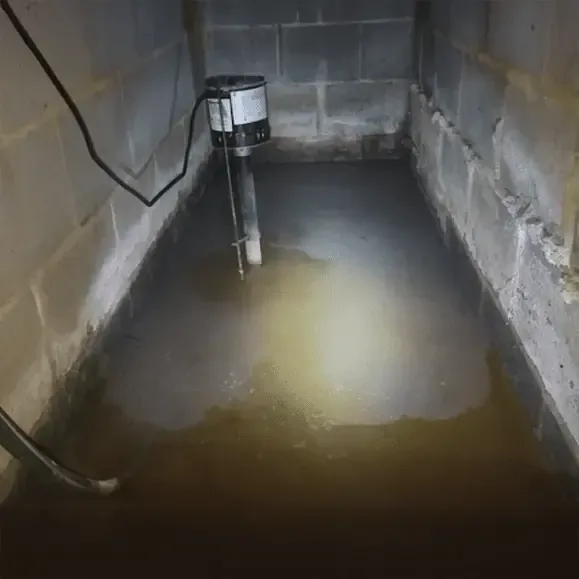
Older Villa Rica houses near downtown and in the former mill village sit on crawl spaces, and a crawl space is the first place heavy rain finds. The water stays out of sight, so it can sit for days before a soft floor or a musty smell gives it away.
Key takeaways
- Water shining on the soil or a soaked vapor barrier is a water loss. A musty smell over dry soil is a humidity problem.
- Georgia red clay drains slowly, so rain can hold against the foundation long after the storm ends.
- Turn off power to any circuit that runs through the crawl space before going near standing water.
- Wet insulation and a soft subfloor mean the water has reached the framing, and each needs its own fix.
- Wood that stays wet for 24 to 48 hours gives mold a start, so pumping and drying come before cosmetic repairs.
Standing water or a damp crawl space?
Heavy rain does not always mean a flooded crawl space. Standing water and damp air can look alike from the access door, but they call for different work.
Standing water shows up as a shine on the soil, puddles in low spots, a soaked vapor barrier or tide marks on the foundation walls. Damp air shows up as a musty smell, moisture beads on ducts and soil that is dry a few inches down.
Tide marks help too. Several stains at different heights on a pier or foundation wall mean the space has been wet more than once, while one fresh dark band points to a recent event.
A short crawl space water check can help an owner sort out which of the two is under the floor.
- Shine a flashlight in from the access door before crawling in.
- Look for stains or wet wood on piers, sill plates and the lowest joists.
- Press on the floor above. A soft or springy spot can mean a wet subfloor.
- Note the color and smell of the water. Brown water with a sewage smell is a different job.
Why rain finds the crawl space in Villa Rica
The city sits on the ridge between the Chattahoochee River basin and the Tallapoosa River basin, so runoff splits fast off sloped lots. A yard that drains away from one house can drain straight toward the next.
Georgia red clay drains slowly. Rain that cannot soak in holds against foundation walls and finds the lowest opening, which is often a vent or a gap at the sill.
March is the wettest month on average, so late winter and early spring are when owners most often find water under the floor.
- Older homes near downtown and in the former mill village sit on crawl spaces rather than slabs.
- Newer subdivisions mix basements, crawl spaces and slabs on sloped lots.
- Downspouts that empty beside the foundation add to what the clay already holds.
The first hours: make it safe, slow the water, take photos
Most of the early work is simple, and none of it needs a person to crawl through deep water.
None of this replaces a professional look. Its purpose is to keep the problem from growing while a crew is on the way, and to give the crew a clear story when it arrives.
Make the space safe
Standing water and electricity do not mix. If wiring, a furnace or a water heater sits in the crawl space, switch off the circuit at the panel before going near the water.
If the panel itself is wet or the water is deep, wait for an electrician.
Slow the water coming in
Pull downspout extensions away from the foundation and clear gutters if that is safe to do. If a supply pipe is leaking under the floor, close the main shutoff first.
Watching the water meter helps. If it keeps moving with every fixture off, the water is coming from a pipe and not from the sky.
Document the loss
Take photos of the water, the wet insulation and any stained wood before anything is moved. Keep notes and receipts for the insurer.
What the extraction crew removes first
A local water damage crew starts by pumping off the standing water, because wood takes up a little more with every hour it sits wet. Water extraction comes before any drying equipment goes in.
Crawl spaces are tight, so crews use low profile pumps and hoses routed out through a vent or the access door. Nobody has to haul buckets, and the water leaves the area quickly instead of draining back toward the foundation.
Then the crew deals with whatever holds water against the floor above.
- Soaked insulation is pulled out, since it presses water against the subfloor and does not dry in place.
- A vapor barrier that is torn or floating is lifted so the soil under it can be checked.
- Moisture readings are taken on joists, sill plates and the underside of the subfloor.
- Silt and debris that washed in are removed so air can move.
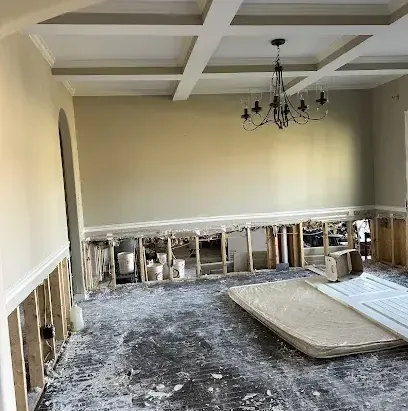
Drying wet joists and subfloor
Wood dries slowly, and humid Georgia air does not help. Crawl space water removal ends with dehumidifiers and air movers set to pull moisture out of the framing, not only out of the air.
The crew rechecks readings on each visit and keeps the equipment running until the wood is within 2 to 4 points of a dry reference. Stopping early is how a floor ends up with a musty smell and a soft spot a month later.
Mold can start on damp wood in 24 to 48 hours, which is why speed matters more than a perfect finish. The drying time estimator gives a rough idea of how long the equipment may run.
Flooring above the space matters as well. Hardwood can cup as the boards below it take on moisture, and vinyl or laminate can trap damp air against the subfloor, so the crew may check those finishes from above before calling the job done.
Keeping the next storm out
After the space is dry, the fix is to give rain somewhere else to go. A grading or foundation contractor can judge what the lot needs.
Water under the floor also hides plumbing trouble. If the soil is wet and it has not rained, check the supply pipes and the water heater before blaming the weather.
A plumber, a foundation contractor and a restoration crew each cover a different part of the problem. The crew removes water and dries the wood, the plumber fixes leaking pipes and the contractor changes how water reaches the house.
- Extend downspouts well away from the foundation.
- Regrade low spots so the ground slopes away from the house.
- Repair torn vapor barriers and vent screens.
- Look under the house after each hard rain, especially in March.
- Ask a plumber or foundation contractor whether a sump pump suits a space that takes on water every wet season.
Questions
How long can water sit in a crawl space before it does damage?
Wood starts taking on moisture right away, and mold can begin on damp wood in 24 to 48 hours. The longer the water stays, the more likely the subfloor and joists will need more than drying.
Will a wet crawl space dry on its own?
Rarely. Slow draining clay, humid air and closed vents keep moisture in place, and the framing needs moisture readings to confirm it is dry.
Should wet crawl space insulation stay or go?
It usually goes. Wet insulation holds water against the subfloor and does not dry well in place, so crews remove it and replace it once the wood is dry.
Does homeowners insurance cover crawl space water?
It depends on the source. Sudden plumbing leaks are treated differently from groundwater and surface runoff, so read the policy wording or ask the insurer before filing.
Is it safe to go into a wet crawl space?
Not with standing water near wiring or equipment. Switch off the power first, and leave deep water or a wet panel to professionals.
Who should be called first, a plumber or a restoration crew?
If a pipe is leaking, a plumber stops it, and the water in the space is a separate job for a restoration crew. When the water came from rain, the crew can start right away and a grading contractor can follow.