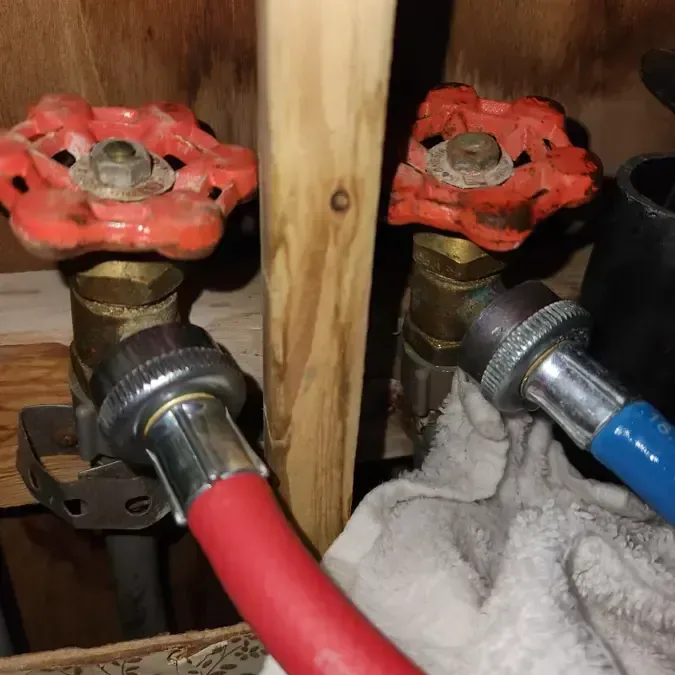
In the 2020 to 2024 American Community Survey, 59.0% of occupied homes in Carrollton are renter occupied, which is 5,896 homes. When a washer hose splits in a rental, the person who finds the water and the person who owns the building both have decisions to make fast.
Key takeaways
- Shut off the water at the appliance valve or the main, then unplug the appliance if it is safe to reach.
- Take photos and video before mopping, and message the landlord in writing right away.
- Leaks travel along floors, behind cabinets and into ceilings below, so check the unit under and next to the leak.
- Wet flooring, cabinet bases and drywall dry best when they are opened early and measured with a moisture meter.
- Renters insurance may cover belongings, and the building policy may cover the structure, so ask both.
Why rental leaks reach more than one home
Carrollton counts 9,992 households and 10,843 housing units. Where a rental shares a floor, ceiling or wall with another home, one slow leak can wet two or three households.
The water moves along the easiest path. It runs across a floor, drops through a ceiling light fixture and wicks up into the wall behind the appliance.
That is also why speed matters for the household that owns the problem. A leak that is dealt with early may stay inside one unit, while one that runs through the night can become a claim for two or three.
- A leak in an upstairs laundry closet can stain the ceiling below.
- A kitchen leak runs under cabinets and out through the toe kick.
- Water behind a refrigerator can sit for weeks without a visible puddle.
The usual suspects
Most appliance leaks come from a small, cheap part that wore out. Knowing the common ones helps a renter find the source quickly.
Appliances near each other make it harder to spot which one failed. A wet floor between a washer and a water heater could come from either, so check the connections before assuming.
Washing machines
Rubber supply hoses crack and burst, and drain hoses slip off the standpipe. An overloaded machine can also overflow, especially when a drain is partly clogged.
Dishwashers, ice makers and sink traps
A worn door gasket, a loose supply fitting or a cracked ice maker tube can leak for weeks behind a panel. A drip under the sink often comes from a loose trap or a supply connector.
- Look for a swollen toe kick or a cabinet floor that feels soft.
- Check the floor in front of the refrigerator for lifting vinyl.
- Listen for a running ice maker valve when the freezer is quiet.
First steps for a renter
The first ten minutes decide how much water ends up in the walls. Acting quickly protects the building and the renter's own belongings.
In many rentals the main shutoff is under a sink or in a utility closet. If a renter does not know where it is, finding it now is a good idea, before any appliance fails.
- Turn off the valve at the appliance. If there is no valve, close the main shutoff.
- Unplug the appliance only if the plug and floor are dry.
- Pull rugs and belongings out of the wet area.
- Photograph and video the source, the water and the damage before cleanup.
- Message the landlord or property manager in writing and keep a copy.
- Contact the renters insurance company if there is a policy.
Who handles what, landlord or renter
Responsibility depends on the lease and on the cause of the leak. A worn hose in a landlord supplied appliance is treated differently from a hose the renter installed.
Neither side needs to settle that question before the water is dealt with. The wet materials should be extracted and dried first, and the paperwork can follow.
A written timeline helps both sides: when the leak was found, when the landlord was told and when the crew arrived. Keep the message thread and any receipts together.
Small details can matter later. Note the age and brand of the appliance, the date it was installed if known and whether a repair had been requested before.
- Keep a simple log of dates, photos and messages.
- Ask the landlord in writing who will schedule the drying.
- Do not throw away the failed hose or fitting until the insurer has seen a photo of it.
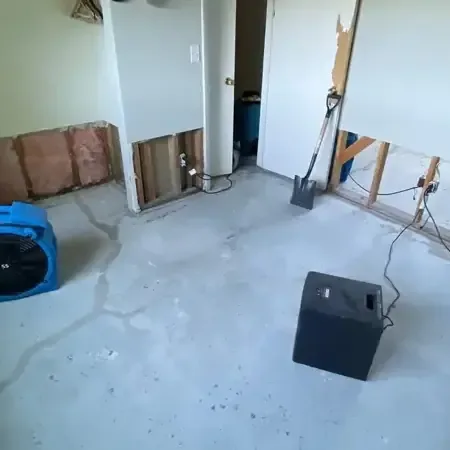
How the crew extracts and dries a rental unit
A local crew begins with water extraction so standing water is gone before drying begins. Then the team checks the surfaces around the appliance with a moisture meter.
Each part of the unit is handled by what it is made of. Appliance leak cleanup often means lifting vinyl or laminate, pulling the toe kick and drilling small holes in cabinet bases so air can reach the cavity.
Floors above a cabinet base or an apartment ceiling can be hard to judge by eye. A moisture meter and a thermal camera show wet areas that look dry, and that is how the crew avoids opening more of the unit than needed.
- Baseboards and toe kicks are removed so air can reach wet drywall.
- Wet padding under carpet is cut out, since it holds water.
- Vinyl or laminate is lifted when water has pooled underneath.
- Dehumidifiers and air movers run until readings reach the target.
Odor, mold and the 24 to 48 hour window
Damp drywall, cabinet bases and carpet pad give mold a place to start in 24 to 48 hours. A musty smell in a room that has had a leak usually means something is still wet.
The fix is to find and dry the wet material, not to mask the smell. Opening the cavity early and measuring it is cheaper than replacing a cabinet run or a whole wall later.
- Do not close up a wet cabinet or wall because it looks dry.
- Run the unit's air conditioning normally unless a crew says otherwise.
- Report a lingering smell to the landlord in writing.
Drying neighboring units and preventing a repeat
When the water has crossed into a ceiling below, the same structural drying steps apply there: open the wet area, measure and dry. The sooner both units are measured, the smaller the repair.
Prevention costs little. Replace rubber hoses with braided ones, leave a few inches behind the washer so hoses do not kink, and avoid running the washer or dishwasher while no one is home.
The same local crew handles other kinds of water loss too, from split pipes to storm water, and the Carrollton water damage team can be reached for any of them.
- Replace old washer hoses every few years.
- Check the area under the sink each month.
- Fix a dripping valve or slow drain early.
- Keep the shutoff valve within easy reach.
Questions
Who pays for damage from an appliance leak in a rental?
It depends on the lease, who owns the appliance and what caused the leak. Renters insurance usually covers the renter's belongings, and the landlord's policy covers the building.
What should a renter tell the landlord?
Report the leak in writing right away, with photos and the time it was found. Say what has been shut off and what is wet.
Can a leak under a dishwasher or washer stay hidden?
Yes. Water can run under cabinets or behind a refrigerator for weeks, and warped flooring or a musty smell is often the first clue.
Is it safe to run a fan to dry the floor?
A household fan helps a little on a small spill, but it cannot reach wet cabinet bases or wall cavities. If the water spread, use a meter to check.
Will the unit below be wet too?
Often, if the floor or ceiling is shared. Water can travel through light fixtures and gaps in the ceiling, so check the unit below as soon as possible.
Can wet carpet in a rental be saved?
Carpet that got clean water, such as from a supply hose, can often be dried if the pad is removed and the area is treated quickly. Carpet that sat for days or touched dirty water is usually replaced.