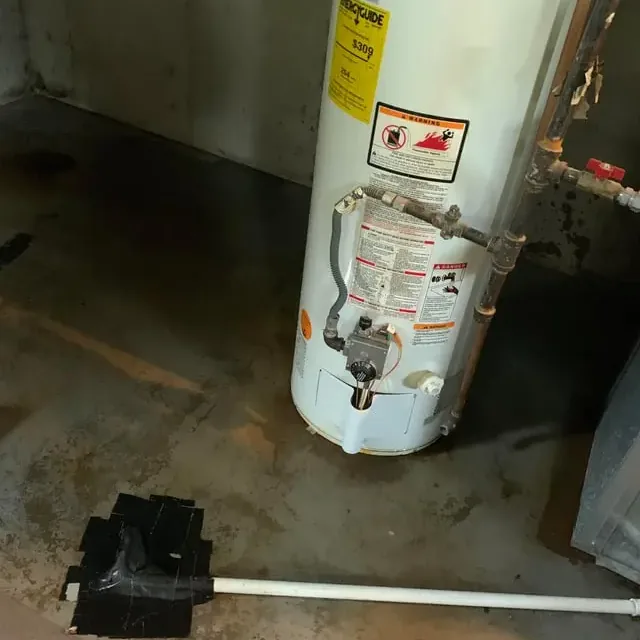
A failed water heater can spread a full tank of water across a floor before anyone gets to the valve. In Austell the repair also involves paperwork, because the city requires a plumbing permit to install, remove, alter or replace plumbing, gas or drainage pipe work, or any fixture or water heating equipment in a building.
Key takeaways
- Closing the cold water valve at the tank stops new water coming in, but the water already on the floor still has to be removed.
- The city requires a plumbing permit to replace water heating equipment, so the cleanup and the new tank are best planned together.
- Where the tank sits decides where the water goes: a closet sends it into walls, a garage across the floor.
- Tank water starts as clean Category 1 water, but it can degrade if it sits in insulation or flooring.
- Dry readings, not a dry looking floor, show when the job is finished.
What a leaking tank does to a floor
A tank water heater holds dozens of gallons, and a seam failure or a corroded fitting can release most of it at once. The water is hot, so the first rule is to keep skin away from it.
Slower leaks happen too. A weeping relief valve, a rusty base or a pinhole can drip for weeks and rot a floor or cabinet before anyone sees a puddle.
A leaking tank keeps filling from the household supply, so a small leak never runs out of water. It continues until the valve is closed, which is why the valve is the first thing to find.
- Rust stains at the base of the tank.
- Water around the relief valve or the pipe fittings.
- A tank that rumbles, pops or runs constantly.
- A damp or swollen floor near the heater.
Austell's plumbing permit rule
Austell requires a plumbing permit to install, remove, alter or replace plumbing, gas or drainage pipe work, or any fixture or water heating equipment in a building. A new tank falls under that rule, so replacing one is permit work and not a casual swap.
The permit matters to the cleanup because it sets the order of the job. The water has to be dealt with first, and the replacement follows once the area is safe to work in.
Paying attention to the permit does not have to delay drying. The crew can extract the water and set up drying equipment while the owner arranges the replacement with the plumber.
- Ask the installer whether the permit has been pulled before the old tank comes out.
- Keep the permit paperwork with the repair records.
- A replacement done without a permit can raise questions during a later sale or inspection.
- Plan the drying schedule around the plumber's visit, not against it.
Where the tank sits changes the damage
Two tanks of the same size can do very different damage, depending on the room around them.
Closets and hall utility rooms
A tank in a closet sends water into wall framing and under flooring in the next room. The wet area is often much bigger than the puddle suggests.
Garages and open utility spaces
In a garage, water spreads across the floor and out toward the door. Boxes and stored items sit in it, and drywall on the shared wall wicks water up.
Lower levels and finished rooms
A tank on a lower level can leave water under carpet or wall coverings in a finished room. That water hides, so moisture readings do the looking for the crew.
Attics and upper floors
A tank in an attic or on an upper floor sends water through the ceiling below. The stained ceiling is often the first sign, and the insulation above it holds the water and keeps feeding the leak.
First steps when a tank starts leaking
The first minutes are about stopping the supply and keeping people safe. Most of these steps need no tools.
If there is a smell of gas near a gas model, leave the house and call the gas supplier from outside. Do not switch lights or appliances on or off while the smell is present.
- Close the cold water supply valve on the pipe above the tank.
- Switch off the breaker for an electric heater or the gas control for a gas model.
- Keep clear of hot water on the floor and keep children and pets away.
- Move stored items out of the wet area.
- Photograph the tank, the label and the water before cleanup.
Extraction and drying after a tank failure
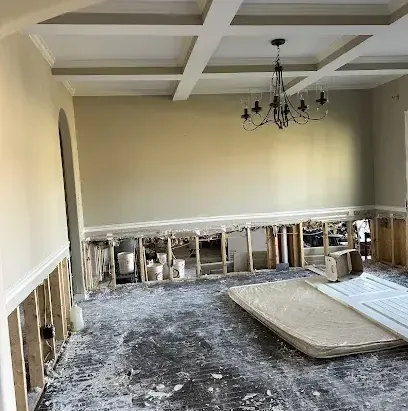
A local crew begins with water extraction, pulling standing water off the floor and out of any carpet. Then the team checks walls, subfloor and cabinets with a moisture meter.
Clean tank water is Category 1 at first, and the goal is to dry it before it ages. Water heater leak cleanup often means removing baseboards, pulling wet insulation from the wall behind the tank and lifting a section of flooring so air can reach the subfloor.
After that, dehumidifiers and air movers run until the readings match a dry reference. The structural drying step is the longest part of the job, and it cannot be rushed by turning up a household fan.
Flooring decides what happens next. Tile and sealed concrete tend to dry well, while laminate and hardwood can swell, and carpet pad is nearly always removed because it holds water.
- Wet insulation behind the tank is pulled out.
- Baseboards come off so wall cavities can dry.
- Cabinet bases are checked and opened if readings are high.
- Readings are logged on each visit.
Signs a tank is close to failing
Most tanks give some warning before they fail. Spotting it early lets an owner plan a permitted replacement instead of mopping a flood.
A plumber can check the anode rod, the relief valve and the connections, and can say whether the tank has more life left.
- Rust colored water from the hot tap.
- Rumbling or popping sounds while the tank heats.
- Moisture at the base or around the relief valve.
- A tank that has been in place for many years and has never been flushed.
Plan the replacement and the cleanup together
The smoothest jobs bring the three parts together. The water is extracted, the plumber replaces the tank under a permit and the crew finishes the drying and checks the readings.
The city's 2017 comprehensive plan says most structures were built before 2000, so plenty of homes have had decades for fixtures to age. A tank that shows rust or a weeping valve is worth replacing before it fails, and the same permit rule applies to a planned swap.
- Ask whether a drain pan with a drain pipe suits the location.
- Learn where the shutoff valve is and test it once a year.
- Replace flexible connectors when the tank is replaced.
- For related causes, see the appliance leak pages, and the local water damage team for other water problems.
Questions
Does Austell require a permit to replace a water heater?
The city requires a plumbing permit to install, remove, alter or replace plumbing, gas or drainage pipe work, or any fixture or water heating equipment in a building, which covers a replacement tank.
Can a leaking water heater be repaired?
A tank that leaks from the shell or a seam is normally replaced. Leaks at a valve or a fitting may be repaired, and a plumber can tell which is which.
Is water heater leak water dirty?
It starts as clean Category 1 water. If it sits in insulation, flooring or cabinets, it can pick up contamination and be treated differently.
Will insurance cover a water heater leak?
Many policies cover sudden water damage from a failed tank, while the tank itself may be handled differently. Read the policy or ask the insurer.
How long does drying take after a tank leak?
It depends on how far the water spread and what it soaked. Equipment stays until readings match a dry reference, which is often several days.